HOW LONG DOES AN OFFICE
FIT OUT TAKE?

Author: Mitchell Brougton, Operations Director, Eden Build.
Reviewed August 2026.
Most people asking this question have a date in mind – a lease expiry, a term start, a board meeting where they have promised the new office will be ready. The useful answer is rarely the one they expect, because the build itself is usually the shortest and most predictable part of the whole thing.
A straightforward office fit out takes somewhere between eight and fourteen weeks on site. But the full programme, from first brief to the day people sit down at their desks, commonly runs five to eight months. The gap between those two numbers is where projects go wrong.
This guide sets out realistic durations by project size, breaks the programme into its three real phases, and explains which stages genuinely cause delay. It is written from the contractor’s side: these are the timescales Eden works to on projects between £100,000 and £4m.

| Project | Time on site | Full programme, brief to handover |
|---|---|---|
| Light refurbishment or single floor refresh, under 2,000 sq ft | 2 – 6 weeks | 8 – 14 weeks |
| Standard Cat B fit out, 2,000 – 5,000 sq ft | 6 – 10 weeks | 16 – 24 weeks |
| Mid-size fit out, 5,000 – 15,000 sq ft | 8 – 14 weeks | 20 – 34 weeks |
| Large or multi-floor scheme, 15,000 sq ft+ | 14 – 26 weeks | 30 weeks – 12 months |
| Cat A fit out (landlord works) | 6 – 12 weeks | 12 – 20 weeks |
Two things to take from this table. First, the on-site figure is the one contractors quote and the one clients remember – and it is roughly a third of the real answer. Second, the ranges widen fast with size, because larger projects carry more approvals, more stakeholders and more long-lead items, not simply more square footage.
An office fit out is not one process. It is three, and only the last one happens on site.
Space planning, layout, specification and costing. For a clear brief on a simple space this can be three or four weeks. For a multi-department business with several decision-makers it routinely takes three months, and most of that is not drawing time — it is waiting for decisions.
Every round of revisions adds one to two weeks. Businesses with a single empowered decision-maker move measurably faster than committees.
This is the phase people forget, and it is where most programmes slip.
Approvals and procurement can run alongside late-stage design, which is why an experienced contractor will push to identify long-lead items before the design is fully signed off.
The construction phase, in rough sequence: strip-out and enabling works, first-fix mechanical and electrical, partitioning, ceilings, second-fix M&E, joinery and finishes, flooring and decoration, commissioning, snagging and handover.
Mechanical and electrical is usually the critical path. Commissioning and testing sit at the end and cannot be compressed much — allow one to two weeks, and do not let anyone plan a move-in for the day after practical completion.

In our experience, delays cluster in five places, and only one of them is the build:
Note what is not on that list: bad weather, and the contractor working too slowly. Internal fit out is largely weather-independent, and the on-site phase is the most controllable part of the programme.
If you have a fixed move-in date, count backwards rather than forwards. For a typical 5,000 sq ft Cat B fit out:
Start planning at least six months before you need to be in. If your lease expiry is driving the date, work back from that and add contingency — standard practice is ten to fifteen per cent on programme for simple projects and twenty to twenty-five per cent for complex ones.
Timescales change when people are still working in the space, or when a school is still teaching. Occupied projects generally take longer overall but avoid the cost and disruption of decanting.
Phasing is the mechanism: the works are broken into zones, each completed and handed back before the next begins. Noisy operations move to evenings and weekends. Access, dust and fire escape routes are managed daily around the occupier.
Eden delivered a phased refurbishment across three occupied floors of the Civic Centre at The Water Gardens, Harlow — 12,000 sq ft, with council staff working throughout. Our school projects follow the same logic, compressed into the summer holidays with a hard, immovable deadline at the start of term.
If your project is in a live environment, expect a longer programme and a more detailed one. That is not inefficiency; it is what protects the people still using the building.
Yes, within limits. The genuine levers are:
What does not work is compressing the design and approvals phase. That is where the time appears to be free, and it is the phase whose shortcuts show up as expensive variations later.
If someone offers you a full fit out from blank brief to occupation in eight weeks, ask specifically what they have left out.
At least six months before your target move-in date for a mid-size project, and longer if your space needs structural alteration or you are taking a building in shell and core condition. Starting early costs nothing; starting late costs either your date or a premium to compress the works.
Usually design and approvals, not construction. Landlord Licence to Alter and long-lead procurement are the two stages most likely to move your handover date.
Often, yes, with phased delivery and out-of-hours working. It extends the overall programme but avoids relocation costs. It needs to be planned from the outset rather than added later.
Not always. Furniture, AV and IT are frequently procured separately and installed after practical completion. Confirm who is coordinating them and when they are scheduled — a finished office with no desks is not a finished office.
Under a JCT contract there are agreed mechanisms for extensions of time and, where the delay is the contractor’s, liquidated damages. More usefully: a weekly programme review with a contractor who tells you early is worth more than any contractual remedy.
Working to a fixed date? Send us your floor plans and your deadline. We will tell you honestly whether it is achievable and what it would take.
Call 0800 043 2639 or email [email protected].
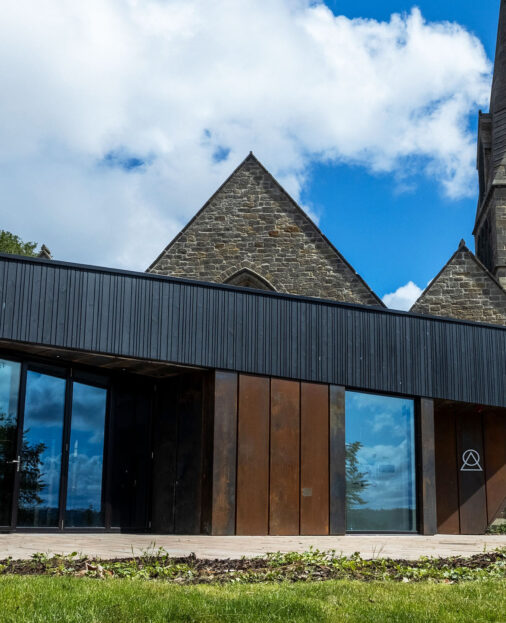 LIGHTHOUSE PROJECT, NEWCASTLE
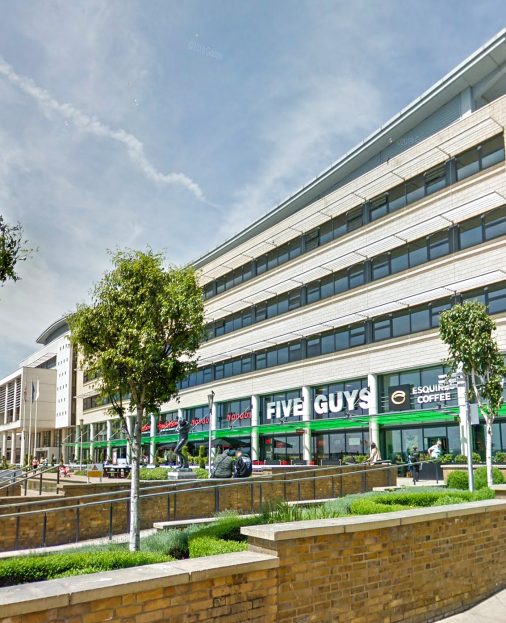 CIVIC CENTRE, THE WATER GARDENS, HARLOW
 BRUNELLO CUCINELLI FIT OUT, MAYFAIR
Eden Build UK Ltd
Unit 33, Woodside Industrial Estate,
Woodside, Thornwood, Epping,
Essex, CM16 6LJ