
This page explains how we run refurbishment in an occupied school: how the works are phased, how pupils and staff are kept away from them, how safeguarding is handled, and what an estates lead or business manager should expect from us week to week.
A live school is a working building with several hundred children in it, a fixed timetable, parents arriving twice a day and staff who still need to get from A to B. That changes almost every decision on site: where the hoarding goes, when deliveries arrive, which fire escape routes have to stay clear, how loud a job can be and at what time, and who is allowed to be where.
It also means the programme is set by the school calendar. Term dates, exam windows, open evenings and inspections are fixed. Our job is to fit the works around them, not the other way round.
Before we price, we walk the school with the estates lead and agree what can happen during term and what has to wait for a holiday. A typical split looks like this:
The result is a phasing plan the school signs off before start. It shows each zone, its dates, the routes in and out, and what the school needs to do (empty rooms, move timetables, tell parents).
We also deal with what usually catches refurbishment programmes out: we get the refurbishment and demolition asbestos survey done early, order long-lead items (fire doors, lighting, ventilation units) before the holiday they’re needed in, and allow for what older school buildings tend to hide.
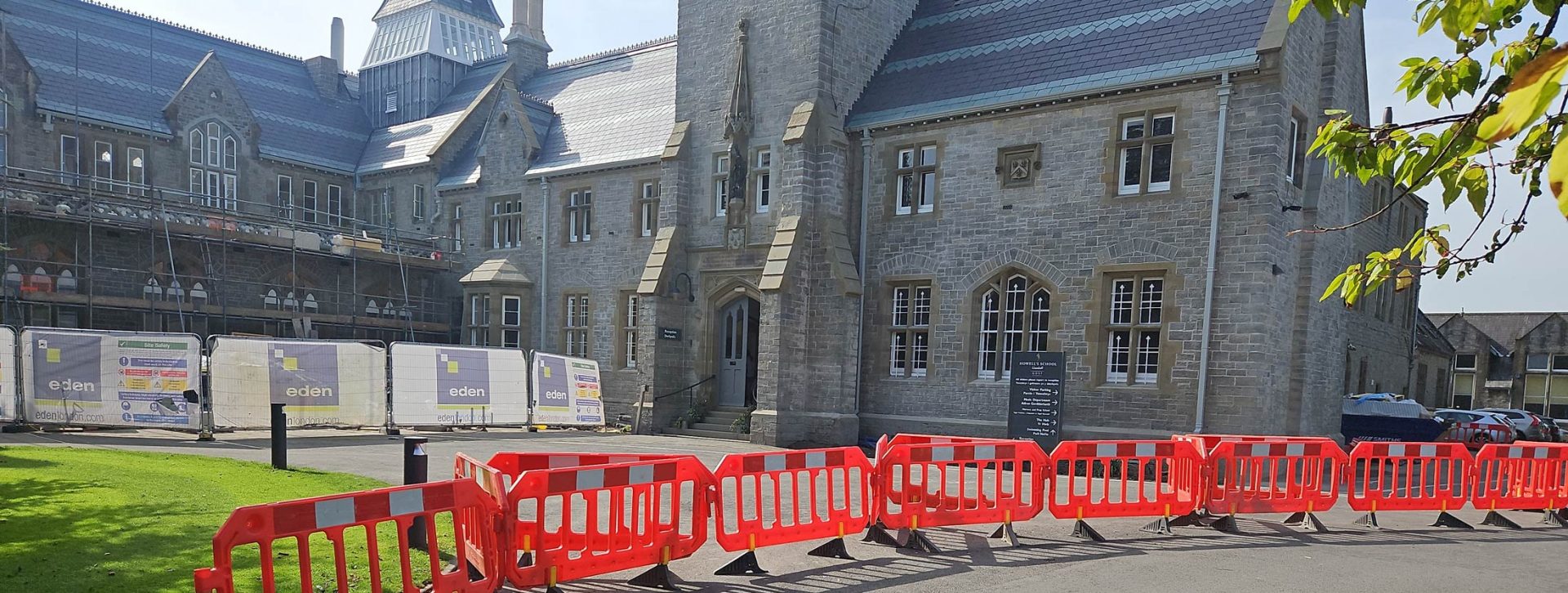
The principle is simple: pupils and staff never share a route with the works. In practice that means:
We work under the Construction (Design and Management) Regulations 2015 as principal contractor. The construction phase plan is written for your school, not lifted from the last job, and our in-house Health and Safety Manager reviews it before start.
We agree the safeguarding arrangements with the school’s designated safeguarding lead before anyone sets foot on site. That covers signing in and out, ID badges, which areas operatives can use, toilets and welfare, no photographs of pupils, and what happens if an operative does come into contact with a pupil.
Whether operatives need enhanced DBS checks depends on whether they’ll have unsupervised contact with pupils. Your Keeping Children Safe in Education policy decides that, and we work to it. Where works are fully segregated, the usual approach is supervised access with Eden’s site manager accountable for everyone on site.
We take the exam timetable at the start of the project and build it into the programme. Near exam halls, noisy work stops during sittings. Where that’s not practical, the noisy phase is moved. The same goes for mocks, open evenings and Ofsted windows if the school wants them protected.
You get one named Eden project manager and one site manager from start to handover. Each week the school receives a short look-ahead: what’s happening, where, and anything that affects staff or pupils. We meet the estates lead or business manager weekly, and we can provide plain-English notes the school can send to parents when a phase changes access.
We run our sites on Procore, so drawings, site diaries, photos and snagging are logged and shared in one place rather than chased by email.
Many school refurbishments are funded through the Condition Improvement Fund or a trust’s School Condition Allocation, with spend deadlines attached. We build the programme back from those deadlines and from the first day of term, and we tell you early if anything threatens either.
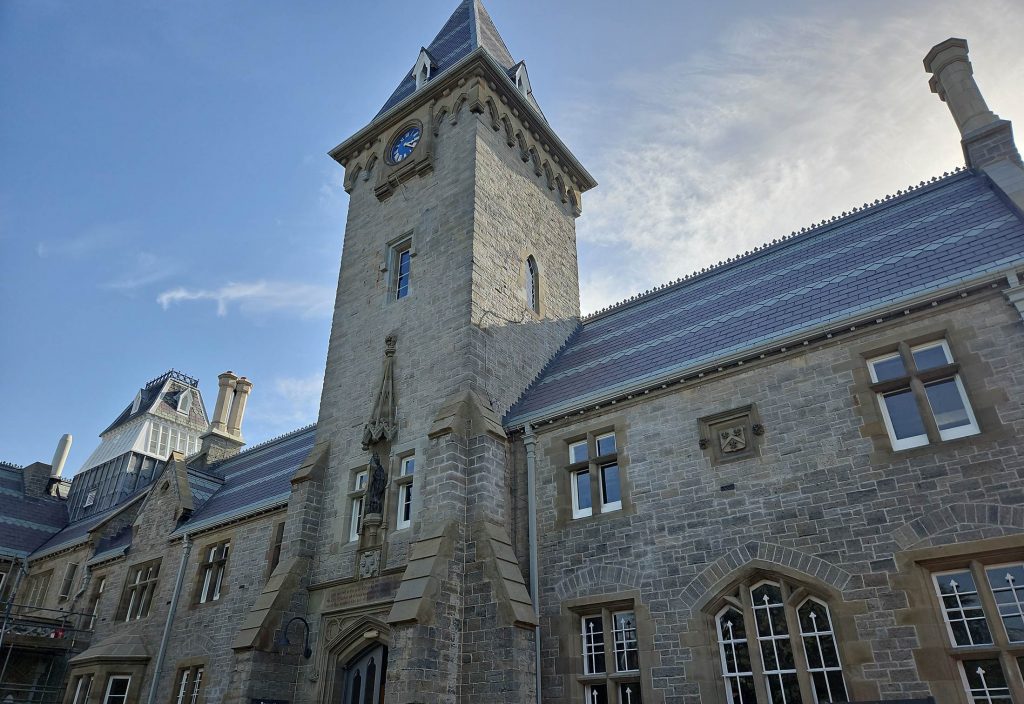
Howell’s School is a Grade II* listed school run by GDST. Eden delivered 25 months of external works while the school stayed fully operational. Scaffolding went up and came down in stages, with new fenced walkways and traffic management to keep pupils, staff and parents clear of the works. The scope included a new roof, rebuilding 13 chimneys, Forest of Dean stone replacement and 1,400 m of lime repointing, all approved by Cadw. We worked through exam season, and also dealt with nesting bats and an unexpected hazardous material find, without closing the school. See the full case study.
If you’re putting a tender list together, these questions separate contractors who’ve done this before from those who haven’t:
Yes. Most school refurbishments are done with the school open. The noisy, dusty and high-risk work (asbestos removal, heavy strip-out, work affecting fire escape routes) goes into the holidays, and the rest is done in closed-off zones during term.
It depends on whether operatives will have unsupervised contact with pupils. The school’s Keeping Children Safe in Education policy decides. Where works are fully segregated, supervised access with a named site manager accountable for everyone on site is the usual approach. We agree this with your safeguarding lead before start.
Solid hoarding or fully closed zones, a separate contractor entrance, deliveries outside drop-off, pick-up and break times, and a banksman for every vehicle movement. Pupils and staff never share a route with the works.
Usually asbestos removal, heavy strip-out and breaking out, anything that affects fire escape routes or the fire alarm, kitchens, and toilet blocks where there’s no alternative. We agree the split with you when we first walk the site.
We build the exam timetable into the programme at the start. Noisy work near exam halls stops during sittings, or the noisy phase is moved so it doesn’t clash.
Ideally by the February half term, and by Easter at the latest. That leaves time to sign the contract and order long-lead items such as fire doors and ventilation units before the holiday starts.